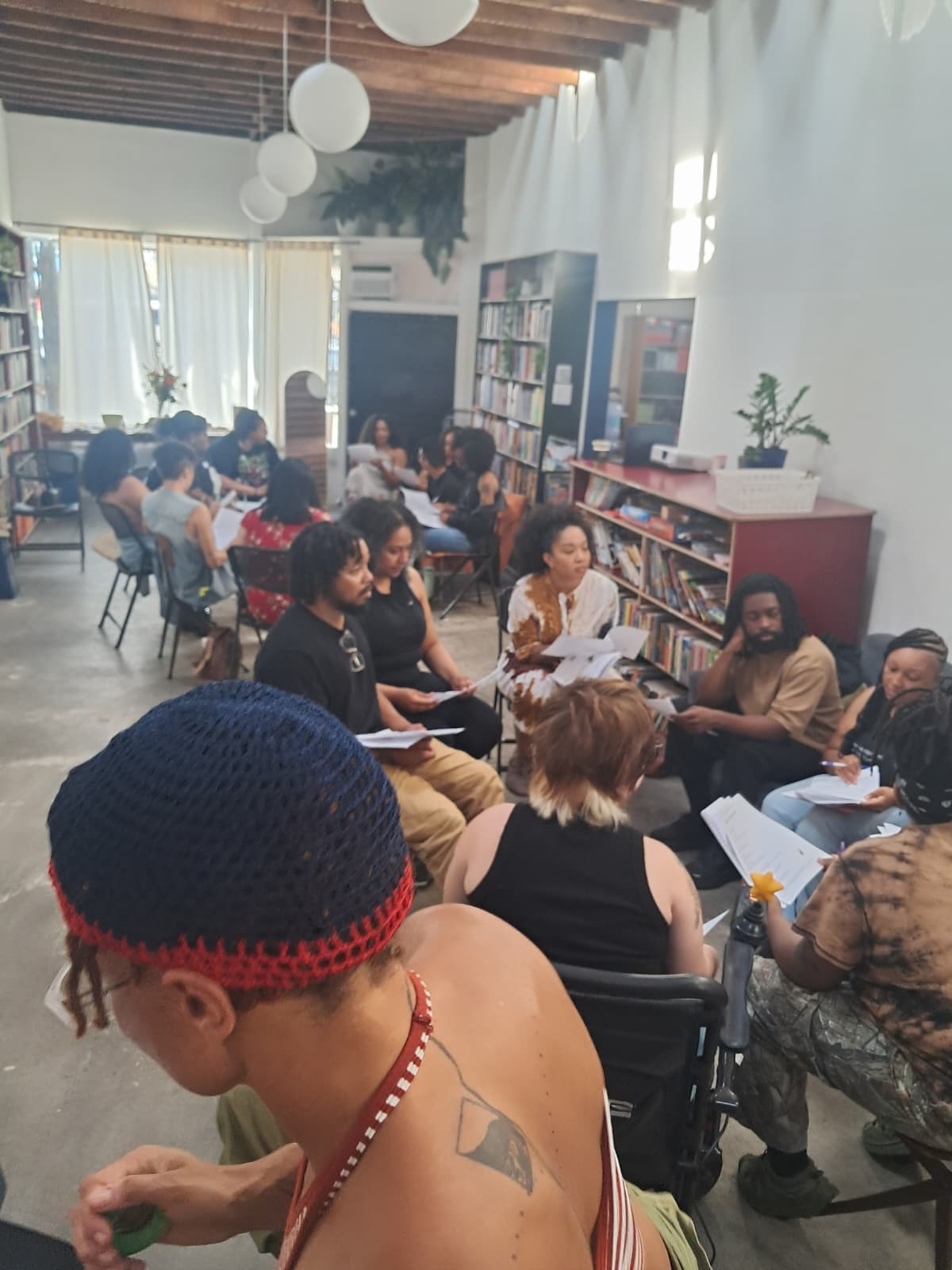
Our methodology draws from Black, Diasporic, Pan African, intersectional, queer, and Afrofeminist critical pedagogy and prepares people to build practical capacity before crisis.
Our methodology draws from:
- Black, Diasporic, Pan African, Intersectional, Queer, Afrofeminist Critical Pedagogy
- Practice-based learning
- Embodied learning
- Scenario-based facilitation
- Collective reflection
- Trauma-informed facilitation
- Political education
Practice-Based Learning
Participants practice concrete responses to conflict and harm through realistic scenarios, structured feedback, and repeated rehearsal.
Survivor-Centered Facilitation
Facilitation is designed to support survivor dignity, pacing, and consent while maintaining accountability and community-centered outcomes.
Embodied Learning
Learning includes the body as well as the intellect, using grounded exercises that help participants notice stress, regulation, and relational impact in real time.
Collaborative Design
Each engagement is co-designed with the organization so content reflects its context, roles, and constraints while protecting curricular integrity.